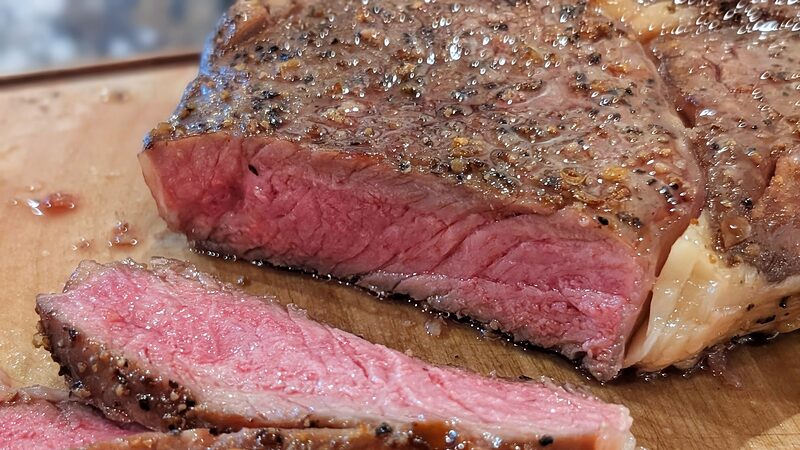
Start with how much beef your household can use

Final packaged weight varies by animal, processor yield, and cut-sheet choices. We will talk through availability and expected yield before you reserve.

Starter share

Quarter beef

Contact for current pricing

A practical first bulk order for families who want variety without filling an entire chest freezer. Includes steaks, roasts, ground beef, and other cuts.

  • Typical packaged range: about 100-130 lb
  • Freezer planning: about 4-5 cubic feet
  • Good for: first-time bulk buyers
Best value

Whole beef

Contact for current pricing

The full animal, often split between households or used by families with significant freezer space. Best value per pound when available.

  • Typical packaged range: about 400-520 lb
  • Freezer planning: about 16-20 cubic feet
  • Good for: large families or splitting

Bulk beef terms, explained plainly

How much freezer space?

Plan for the box, not just the pounds

A quarter beef often needs roughly 4-5 cubic feet of freezer space, a half needs roughly 8-10, and a whole needs roughly 16-20. Packaging shape, bone-in choices, and final yield can change that.

Hanging weight

The weight before cutting and trimming

Hanging weight is measured before the beef is broken down into freezer-ready packages. It is useful for pricing and processing, but it is not the same as what you take home.

Packaged weight

The frozen beef you bring home

Packaged weight is lower than hanging weight because trimming, boning, moisture loss, and cut choices all affect final yield. We explain both so there are no surprises.

Know what to ask for when the processor calls

A cut sheet tells the processor how to break down your beef. If you are not sure, we can help you choose based on how your household cooks.

Steaks

Quick-cook cuts for grill, cast iron, or broiler. Best cooked hot and watched closely.

Ribeye

Rich, flavorful steak from the rib section. A favorite for the grill.

Grill / cast iron

New York strip

Beefy steak with a firmer bite than ribeye. Handles high heat well.

Grill / broil

Tenderloin

The most tender steak cut. Lean, mild, and best not overcooked.

Pan-sear / grill

Sirloin

A versatile everyday steak with solid flavor and less fat than rib cuts.

Grill / stir fry

T-bone or porterhouse

Bone-in steak with strip on one side and tenderloin on the other.

Grill

Flank or skirt

Lean, flavorful cuts that benefit from marinade and slicing against the grain.

Marinate / slice thin
Roasts and slow-cook cuts

These reward time. Low heat turns working cuts into deep, satisfying meals.

Chuck roast

Shoulder cut that shines as pot roast, shredded beef, or slow-cooker meals.

Braise / slow cooker

Brisket

A chest cut that needs time, smoke, or braising to become tender.

Smoke / braise

Round roast

Lean roast from the rear leg, good cooked low and sliced thin.

Roast / slice thin

Short ribs

Bone-in, flavorful, and built for slow cooking until tender.

Braise / smoke
Everyday freezer staples

The cuts that make bulk beef useful on normal weeknights.

Ground beef

The backbone of most freezer orders: burgers, tacos, chili, meatloaf, pasta sauce, and quick dinners.

Weeknight meals

Stew meat

Pre-cut cubes from working muscles, ready for soups, stews, and slow-cooker meals.

Soup / stew

Soup and marrow bones

Useful for stock, broth, and adding depth to soups and sauces.

Stock / broth

Liver and organ meats

Available by request when included in your cut sheet. Ask early if you want them.

Request ahead

Answers before you reserve

How much freezer space do I need for bulk beef?

Plan on roughly 4 to 5 cubic feet for a quarter beef, 8 to 10 cubic feet for a half beef, and 16 to 20 cubic feet for a whole beef. Final space depends on packaged weight and cut choices.

What is the difference between hanging weight and packaged weight?

Hanging weight is the carcass weight before cutting, trimming, and packaging. Packaged weight is the frozen beef you take home. Packaged weight is lower because bone, trim, moisture loss, and cut choices affect final yield.

Is the beef processed at a USDA-inspected facility?

Mountain Valley Farms works with a trusted local USDA-inspected processor. Beef is returned vacuum-sealed, frozen, and labeled by cut.

Do I need to know every cut before I order?

No. Tell us how your family eats. We can help you think through steaks, roasts, ground beef, bones, stew meat, and organ meats before your cut sheet is finalized.

Ask what is available for the next processing date.

Tell us whether you are thinking quarter, half, or whole beef. We will help you understand timing, yield, freezer space, and pickup.

Contact Us to Order